
GOOGLE UPDATES
Google's September 2026 Spam Update: What's Actually Happening?
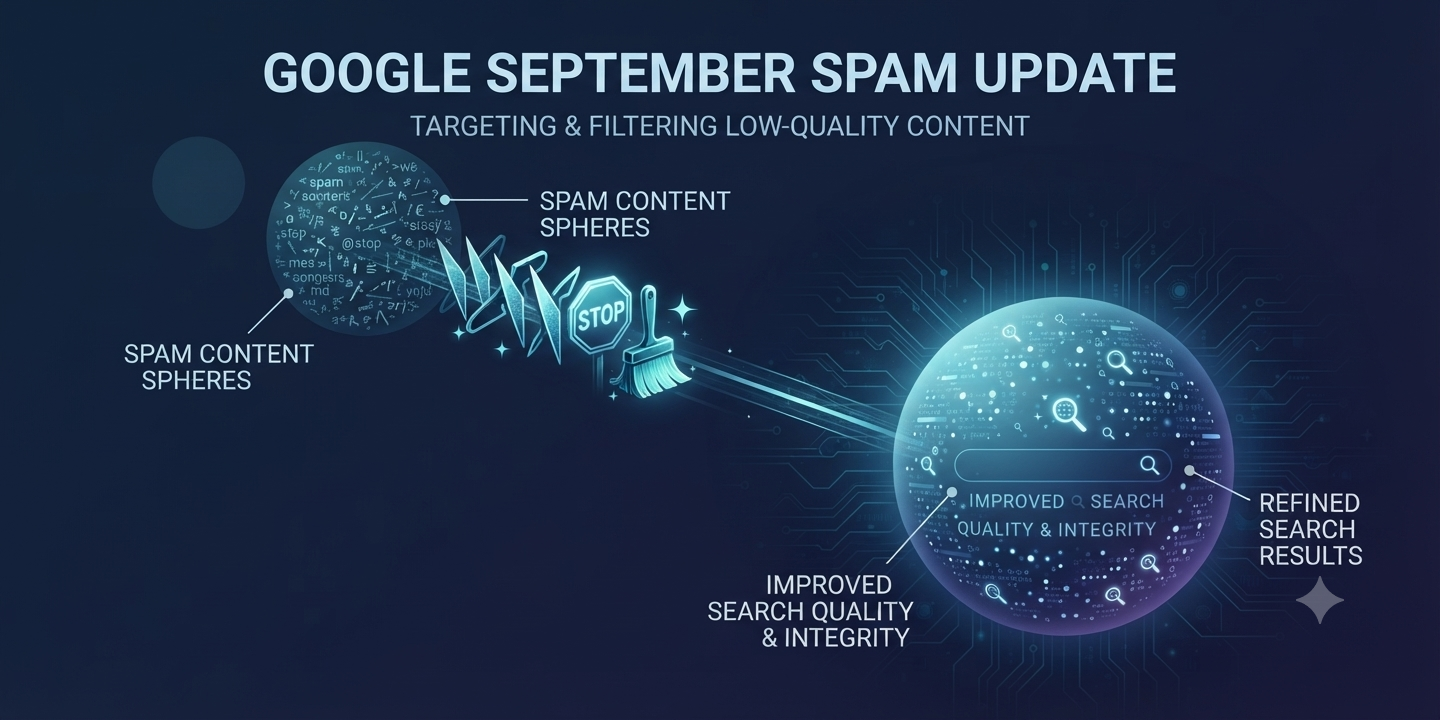
Google released another spam update on September 24. Unlike previous updates that wrapped up in 2 days, this one's taking a full 2 weeks to roll out. SERP volatility has reached 9.4/10 levels. Here's what the data is actually showing.
Written & Reviewed by Vijayraj Nadar
Sep 27, 2026 • 5 min read
Key Takeaways
- Google released its 4th spam update of 2026 on September 24, with rollout taking up to 2 weeks
- SERP volatility reached 9.4/10 Googlequake level, with the largest spike on September 25
- Local queries are most affected—aggregators like Practo have dropped, while local players and Justdial gained significantly
- Google Business Profile map pack listings are also seeing notable movement
- Monitor your listings and profiles over the 2-week rollout instead of making panic-driven changes
Google Has Rolled Out Another Spam Update
- Google confirmed the rollout of its September 2026 spam update on September 24, 2026 at 09:15 PDT
- (US/Pacific). This is the 4th spam update the company has released this year.
- The update applies globally and to all languages. Here's what makes this one different: Google says the rollout may take up to two weeks to complete. That's unusual. Previous spam updates typically wrapped up in 2-3 days, so if you were expecting everything to settle by now, recalibrate your timeline.
Then the SERPs Started Moving
- If you opened Semrush or any tracking tool in the last few days, you already know the volatility level we're dealing with. The data tells a clear story.
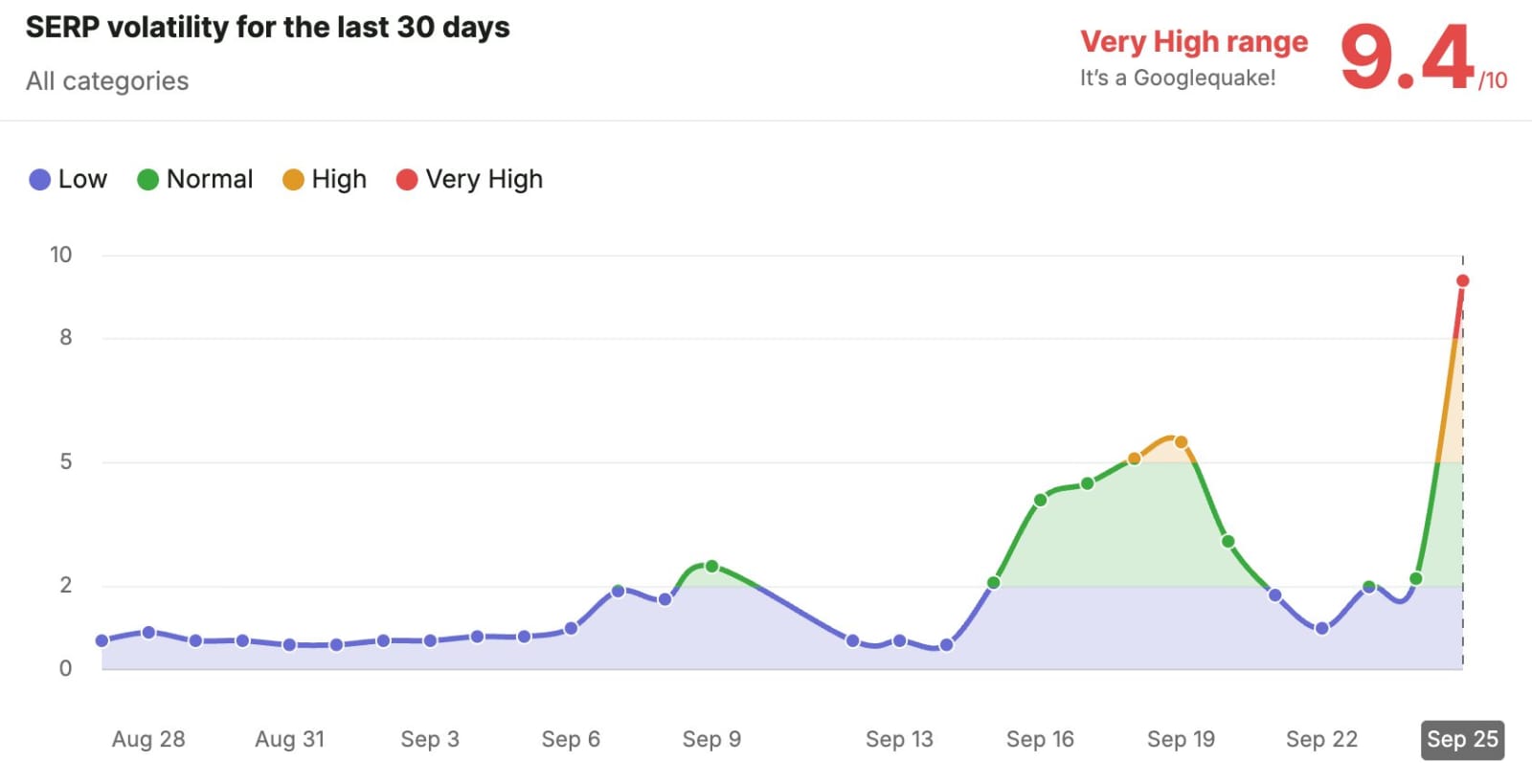
- The spike to 9.4 on September 25 shows the extent of ranking movement happening across the board. That's the kind of volatility you see when a major shift rolls through the algorithm. For context, volatility in the Very High range (anything above 8/10) is what tools label as Googlequake territory.
- Important distinction here: just because there's volatility doesn't automatically mean the spam update caused every single movement you're seeing. Volatility tools measure SERP fluctuation broadly. But the timing and severity of this spike align closely with the rollout window, so most of this movement is likely related.
What I'm Seeing
- I've been tracking the SERPs closely for the last few days, particularly around local queries. Here are the raw observations:
- Local queries and aggregators are taking hits. Big aggregator platforms that were ranking comfortably have dropped by a couple of positions. For example, Practo has seen a slight ranking decline on specific local queries. Meanwhile, local players and platforms like Justdial have gained ground significantly—in some cases grabbing 2 listings at once in the search results.
- The Google Business Profile (GBP) situation is equally active. The map pack is experiencing its own share of drama. Sites and profiles that were already performing well have managed to hold their ground, but I'm also seeing new entrants pop up in the map pack results. This suggests the update is reshuffling which local businesses get visibility.
- Note: I have intentionally not included
- AI Overviews and LLMs
- in this analysis. Those are a separate topic with their own dynamics.
The Important Distinction
- This is crucial because different types of information carry different weight.
- What Google has confirmed: The September 2026 spam update was released on September 24 at 09:15 PDT. It applies globally and to all languages. The rollout may take up to two weeks to complete.
- What the SERP/data appears to be showing: Ranking volatility spiked to 9.4/10 on September 25. Local queries are experiencing the most visible movement. Aggregators have seen ranking drops. Local businesses and local-focused platforms have gained visibility. Map pack results are shifting.
- My interpretation as an SEO practitioner: Based on these patterns, the update appears to be targeting spam characteristics common in local search and competitive niches. The aggregator visibility shift suggests Google is rewarding local authority and smaller, more specialized players. But this is interpretation based on observed patterns, not a confirmed fact from Google.
What Should SEOs Actually Look At?
- Keep calm and monitor. Just continuously watch your Google Business Profile and organic rankings. You don't need to overreact or make dramatic changes based on preliminary data.
- Let the dust settle. Give the update its full two weeks. The rollout isn't done yet, and rankings will continue to fluctuate. If you make drastic changes right in the middle of the rollout, you'll just add noise to your own data and make it harder to understand what actually happened.
- Save the Root Cause Analysis for later. If your rankings are still down after the dust settles—after the full two-week rollout window has passed—then sit down and run a proper RCA. Look at what changed, whether your content is actually meeting Google's quality standards, and whether there are any spam signals or policy violations that need addressing.
My Take
- This is just my personal POV based on tracking current SERP movements. It's not an official Google statement, guideline, or panic advisory—just an SEO practitioner geek out over algorithm updates. The data is telling a story, but that story will become clearer once the rollout finishes and the rankings stabilize.
- The 2-week timeline is the key difference here. Most of us are used to updates hitting hard and settling within 48 hours. This extended rollout means volatility will be your reality for a while longer. Use that time to monitor, gather data, and avoid knee-jerk reactions. That's the winning move here.
- Take a breath, monitor your data, and don't make any rash moves.
References
- For more context, check out
- SERoundtable's coverage of the broader spam update landscape
- .
- For official guidance on Google's spam policies and what qualifies as spam in search, see the
- Google Spam Policies documentation
- .
- Disclaimer: The views and observations shared above are strictly my own personal POV based on tracking current SERP movements. This is not an official Google statement, guideline, or panic advisory—just an SEO practitioner analysing what the data is showing.