
GOOGLE UPDATES
SERP Poisoning: Is Google Showing Misleading Search Results to Rank Trackers and AI Scrapers?
What if some of the ranking volatility reported by SEO tools isn't caused by actual ranking changes, but by the search results those tools are collecting?
A recent analysis by enterprise rank-tracking platform Nozzle raises this possibility.
Published on October 10, 2026, the research examines 27.5 million Google search engine results pages (SERPs) collected across 49 countries.
Nozzle identified unusual search results that appeared structurally normal but contained significantly different organic rankings. The company describes this phenomenon as SERP Poisoning.
Its interpretation is that Google may be deliberately returning misleading results to automated scrapers, potentially disrupting AI companies that collect search data and rank-tracking platforms that rely on the same information.
While Google's intention remains unconfirmed, the findings raise important questions about the reliability of automated search measurement.
Written & Reviewed by Vijayraj Nadar
Oct 15, 2026 • 12 min read

5 Key Highlights
8% of eligible SERPs were classified as poisoned: Nozzle collected 27.5 million SERPs and evaluated 17.8 million against its historical benchmarks. Approximately 8% of the eligible results met its poisoning criteria, compared with 0.17% during the baseline period.
Significant artificial SERP volatility: Normal results retained 88.5% of the same websites across repeated searches. Suspected poisoned SERPs retained just 20.7%.
Tracked websites frequently disappeared from the top 10: This occurred in 58.6% of suspected poisoned SERPs, compared with 2.7% during the baseline.
AI Overviews and other SERP features were affected: AI Overviews appeared less frequently, while image packs, forums and social platforms appeared more often.
Most affected SERPs recovered quickly: In 77.9% of eligible affected cases, the keyword's usual websites returned within three days.
What Is SERP Poisoning?
Search engines have traditionally relied on methods such as rate limiting, CAPTCHA challenges and request blocking to manage automated access.
But Nozzle's research describes a different type of behaviour.
Instead of blocking a scraper, Google appears to return a complete, normal-looking search results page containing results that differ substantially from the keyword's established ranking history.
This creates an important distinction.
A blocked request tells an automated system that the data could not be collected. The system can retry or mark the request as unsuccessful.
A misleading SERP, however, may be processed and stored as valid ranking data.
This could introduce artificial volatility into ranking reports without necessarily reflecting a genuine change in what users see.
Nozzle calls this behaviour SERP Poisoning.
It is important to distinguish between the observed patterns and the proposed explanation. Nozzle provides evidence of unusual SERP behaviour, but deliberate anti-scraping intent has not been independently established.
How Nozzle Identified Suspected Poisoned SERPs
One of the important aspects of the research is its methodology.
Rather than identifying poisoned results simply because rankings changed, Nozzle compared each keyword's current SERPs with its historical ranking patterns.
The methodology broadly involved:
Identifying websites that consistently appeared in a keyword's top 10 during the August 20 to September 9 baseline period.
Establishing the keyword's usual websites based on their appearance in at least 60% of baseline SERPs.
Flagging results where fewer than half of those usual websites appeared anywhere in the collected SERP.
Confirming that the missing websites returned in a later observation.
This final condition matters because it helps distinguish temporary, unusual result sets from more persistent ranking changes.
However, the methodology cannot independently establish what an ordinary user saw at the same moment or why Google returned a particular result set.
7 Key Observations From Nozzle's Research
1. The Scale of Suspected SERP Poisoning Is Significant
Nozzle collected 27.5 million SERPs across 49 countries, including desktop, iPhone and Android results.
Of the 17.8 million SERPs eligible for evaluation, approximately 8% were classified as poisoned.
During the baseline period, the comparable rate was just 0.17%.
Nozzle observed a sequence of changes:
September 13: Large numbers of automated requests began failing.
September 20: Suspected poisoned SERPs began appearing.
September 27–29: The share reached approximately one-quarter of evaluated results.
October 1–9: Daily rates generally ranged around 5% to 11%, with October 9 lower at 4.2%.
The pattern suggests a substantial change in the search results being collected by Nozzle's systems.
However, these percentages describe Nozzle's eligible monitored SERPs, not the percentage of all searches performed on Google.
2. Artificial SERP Volatility Could Be Misinterpreted as Genuine Ranking Movement
Perhaps the most important observation concerns the consistency of websites appearing across repeated searches.
| Measurement | Normal SERPs | Suspected Poisoned SERPs |
|---|---|---|
| Website retention across repeated searches | 88.5% | 20.7% |
Normal SERPs retained most of the same websites between observations.
Suspected poisoned SERPs showed dramatically lower consistency.
For SEO teams, this raises a practical concern.
A sudden ranking decline might be interpreted as the result of an algorithm update, competitor activity, technical issue or content-related change.
But what if the ranking movement originated from an unusual SERP collected by the tracking platform?
This is where repeated validation becomes important.
Not every ranking fluctuation necessarily represents a genuine change in organic search visibility.
3. Tracked Websites Disappeared From the Top 10 Far More Frequently
Nozzle also examined what happened to websites being monitored by its customers.
The findings were substantial.
| Measurement | Baseline | Suspected Poisoned SERPs |
|---|---|---|
| Tracked website absent from top 10 | 2.7% | 58.6% |
In suspected poisoned SERPs, tracked websites were far more likely to disappear from the first ten organic results.
Imagine a website consistently ranking within the top five positions for an important commercial keyword.
A rank-tracking report suddenly shows the website outside the top ten.
That movement could trigger an investigation, competitor analysis or even changes to the SEO strategy.
But if the underlying SERP is anomalous, the reported drop may not represent a lasting ranking change.
This doesn't mean sudden ranking drops should be ignored. It means unusual movements should be verified before drawing conclusions.
4. Social Platforms and Forums Appeared More Frequently
Another interesting finding was the increased presence of user-generated content platforms.
Nozzle compared how frequently particular domains appeared in the top ten of suspected poisoned SERPs versus other results for the same keywords.
| Platform | Other SERPs | Suspected Poisoned SERPs |
|---|---|---|
| 20.8% | 28.8% | |
| 28.3% | 33.8% | |
| 6.2% | 9.3% | |
| 9.6% | 12.1% | |
| Quora | 5.3% | 6.7% |
| YouTube | 16.3% | 13.9% |
| Yelp | 12.9% | 11.1% |
| MapQuest | 4.2% | 3.5% |
Reddit recorded the largest increase among these platforms, while YouTube, Yelp and MapQuest appeared less frequently.
The reason remains unclear.
However, the observation is relevant because forums, social platforms and user-generated content have become increasingly important in search visibility discussions.
If automated collection systems encounter disproportionately more UGC results, competitor and SERP composition reports could be affected.
It would be premature to interpret these findings as evidence that Google is generally giving social platforms greater ranking preference for real users.
5. AI Overviews and SERP Features Showed Noticeable Differences
The differences were not limited to organic rankings.
Nozzle also observed changes in several SERP features.
| SERP feature | Baseline | Suspected Poisoned SERPs |
|---|---|---|
| AI Overviews | 54.2% | 34.9% |
| People Also Search For | 87.2% | 52.7% |
| Image Packs | 23.0% | 44.2% |
| Forum Blocks | 20.5% | 27.0% |
AI Overviews appeared 19.3 percentage points less frequently in suspected poisoned SERPs.
Image packs appeared almost twice as often.
These differences matter because search measurement is no longer limited to traditional organic rankings.
Businesses increasingly monitor AI Overview appearances, image visibility, forum results and other SERP features.
If the underlying search results are inconsistent, the reported visibility of these features may also be affected.
The data does not establish why particular SERP features appeared more or less frequently.
6. Local Search Targeting Was Not the Main Differentiator
At first glance, geographically targeted searches appeared to show higher rates of suspected poisoning.
Nozzle reported:
Country-level targeting: 7.8%
City-level targeting: 8.4%
Postal-code targeting: 10.7%
However, these differences were influenced by the mix of mobile and near-me searches.
When Nozzle compared 21,508 matched keyword pairs using the same country and device, the rates were almost identical:
National targeting: 7.5%
Local targeting: 7.4%
This suggests that geographic targeting itself was not the main explanation for the difference.
Interestingly, near-me queries as a category showed a higher suspected poisoning rate of 11.4%, compared with 7.8% for other queries.
For local SEO measurement, this reinforces the importance of controlling for keyword intent, device and location before interpreting SERP differences.
7. Most Suspected Poisoned SERPs Returned to Normal Within Days
One of the more useful findings concerns recovery.
Nozzle reported that 77.9% of eligible affected SERPs had their usual websites return within three days.
It also examined how long individual poisoning episodes lasted:
80% lasted for one collected SERP.
15% lasted for two consecutive collected SERPs.
5% lasted for three or more collected SERPs.
This temporary nature is particularly important.
A website could appear to lose rankings during one collection cycle and recover during a subsequent check, even without any meaningful change to its SEO implementation.
That creates the possibility of artificial ranking volatility in automated reports.
However, temporary ranking movement alone is not sufficient evidence of SERP poisoning.
Why Might Google Be Doing This?
Nozzle interprets the findings as a possible response to automated collection of Google Search results.
There are several plausible explanations.
1. Disrupting AI scraping and answer grounding
AI systems and supporting services may collect search results to retrieve information used in generated answers.
Returning inconsistent results could potentially reduce the reliability of this data.
2. Making automated rank tracking more difficult
Rank-tracking platforms collect SERPs at scale to monitor keyword positions, competitive visibility and ranking movements.
Unusual or misleading results could introduce inconsistencies into their measurements.
3. Limiting search-result reverse engineering
Large-scale collection of search results can also be used to study ranking patterns and identify potential ways to manipulate search visibility.
Inaccurate data could make this process more difficult.
These explanations remain hypotheses. The research does not establish Google's specific motivation, nor does it prove that all automated scrapers receive the same treatment.
What Does This Mean for SEO Teams?
The findings do not mean that rank-tracking tools should be abandoned.
Third-party tools remain essential for competitive research, search visibility measurement and understanding broader SERP trends.
However, they highlight the importance of validating unusual observations.
A practical approach could include:
1. Validate sudden ranking changes
Before interpreting an unexpected ranking decline, check whether the movement persists across multiple collection cycles.
2. Compare ranking data with Google Search Console
Look for supporting changes in impressions, clicks and average position. These metrics are not perfect substitutes for ranking data, but they provide additional context.
3. Examine whether the movement is isolated
Check whether multiple unrelated keywords or websites experienced unusual changes at the same time.
4. Review SERP feature changes separately
Unexpected changes in AI Overviews, image packs or forum blocks should not automatically be interpreted as genuine changes in search visibility.
5. Understand how tracking platforms handle anomalous data
Ask whether the platform performs repeated checks, identifies unusual SERPs or flags potential collection inconsistencies.
The objective is not to eliminate rank tracking. It is to improve confidence in the conclusions drawn from the data.
Final Takeaway: Are We Measuring Search Visibility or the Data Our Tools Collect?
Nozzle's research raises an important question about the reliability of automated search measurement.
SEO professionals rely on third-party platforms to understand rankings, competitor visibility, SERP volatility and increasingly AI visibility.
But these measurements depend on the consistency of the underlying data.
If automated systems occasionally collect results that differ substantially from established search patterns, some reported ranking movements may not reflect genuine changes in organic visibility.
The challenge is identifying which movements represent real changes and which require further validation.
This is especially important when ranking reports influence technical priorities, content strategies, competitive decisions and business reporting.
The takeaway isn't that rank-tracking tools are unreliable. It's that unexpected data should be validated before it becomes the basis for an SEO decision.
As search measurement continues to evolve, the ability to interpret and verify data may become just as important as the ability to collect it.
Research source: Nozzle, Poisoned Google SERPs, published October 10, 2026. Data through October 9, 2026.
https://nozzle.io/research/poisoned-google-serps/
Research disclaimer: The statistics and observed patterns discussed in this article originate from Nozzle's analysis of its collected search results. The term SERP Poisoning reflects Nozzle's classification methodology. Google's deliberate intent to mislead automated scrapers has not been independently confirmed, and the findings should not be interpreted as evidence that ordinary search users are receiving the same results.
RELATED ARTICLES
GOOGLE UPDATES
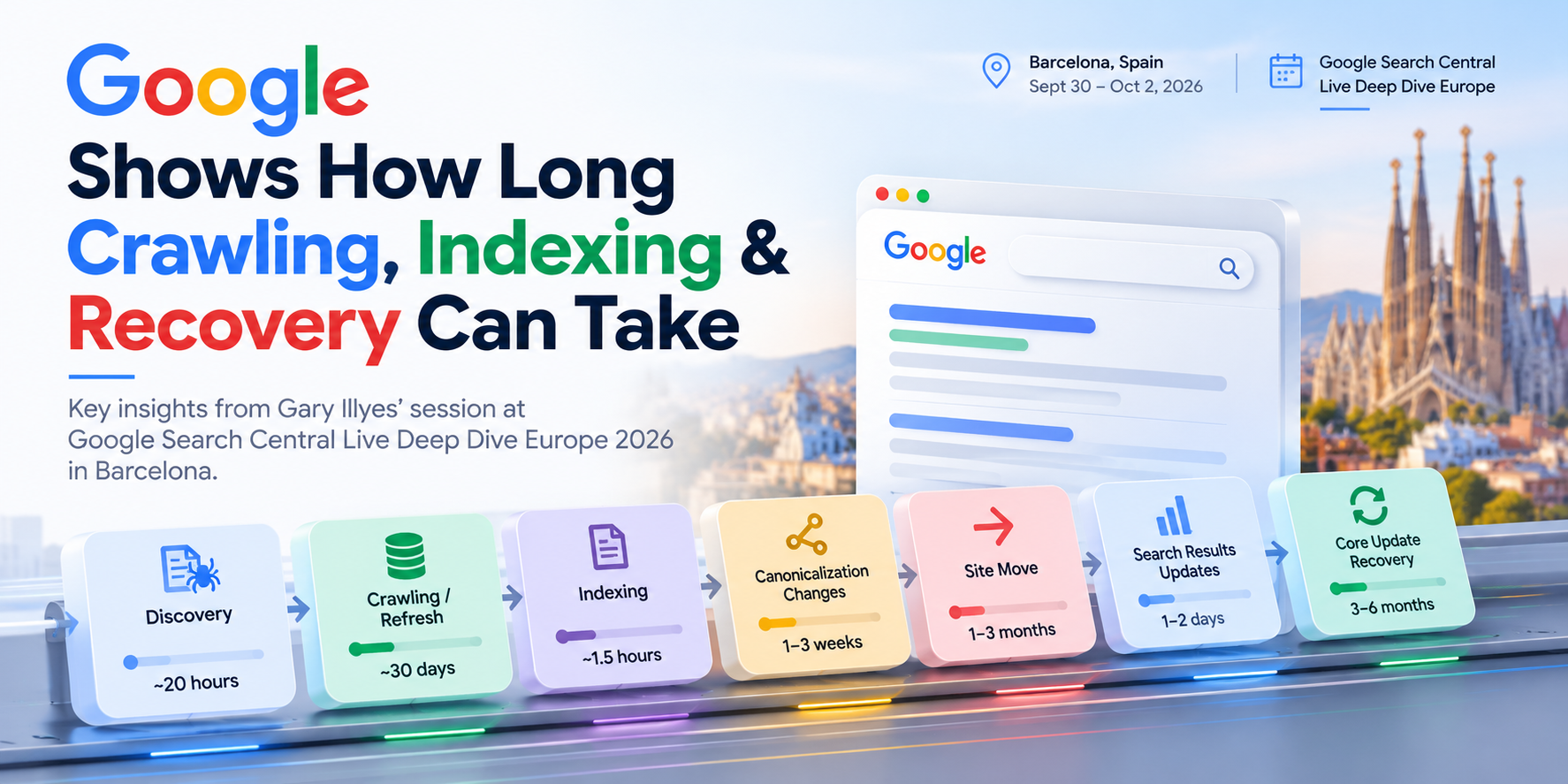
The Google Timeline: Why Crawling, Indexing & Recovery Take Longer Than You Think
Google shared timing ranges for crawling, indexing, site moves, Search result changes and core update recovery at Search Central Live Deep Dive Europe 2026. Here is what those timelines mean for SEO teams.
GOOGLE UPDATES
Google's September 2026 Spam Update: What's Actually Happening?
Tracking SERP volatility and ranking changes from the September 2026 spam update—with observations based on actual data showing how local queries and aggregators are moving.